



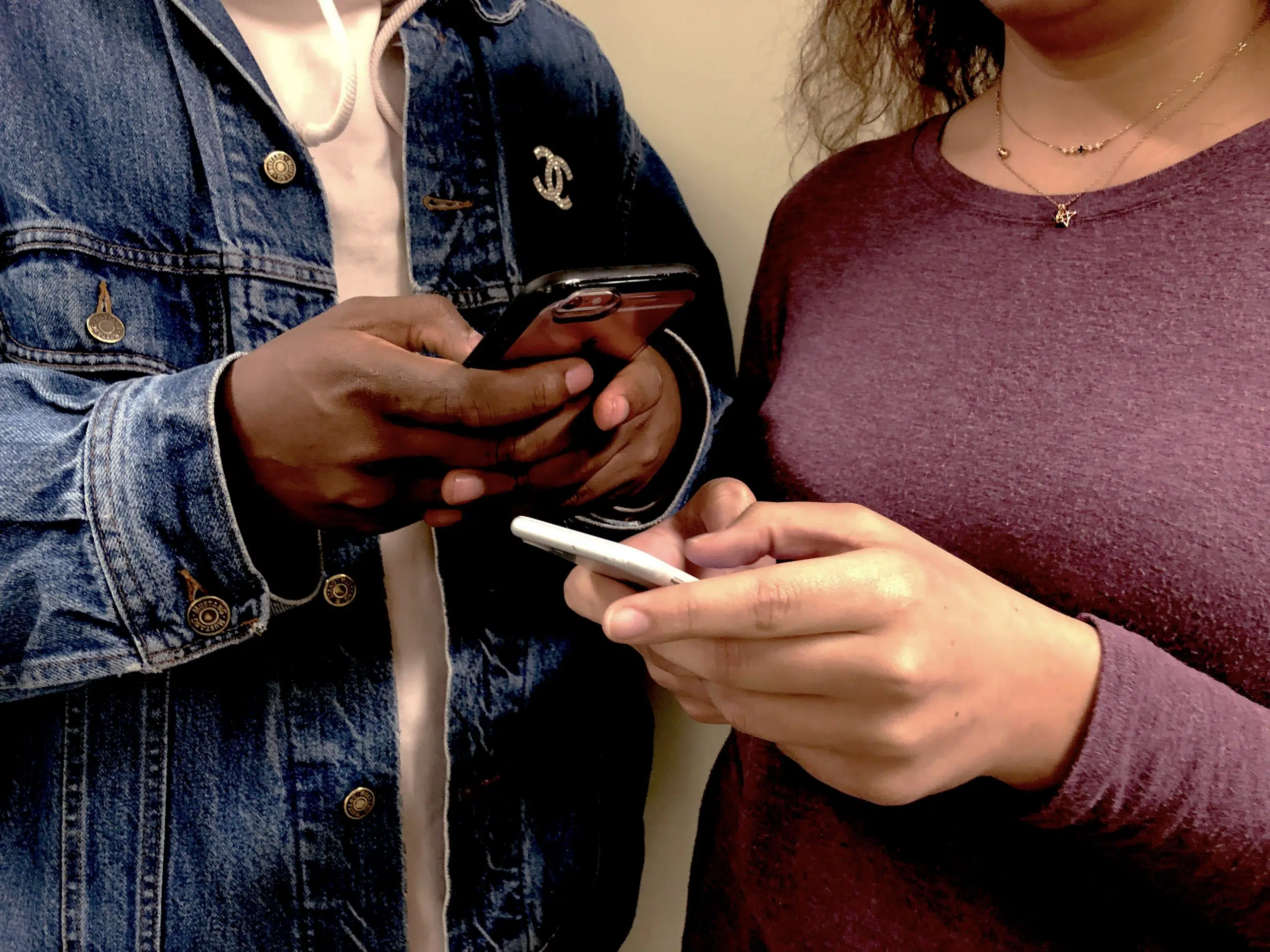
Smartphones as an important part of everyday life [Maryna Tverdokhlib]
For millions of visually-impaired and blind people, the web is a complete different thing.
Some visually-impaired people can perceive light and shadows, some can even recognize large objects and familiar people. This video shows how visually-impaired people might see a room.
For visually-impaired individuals, it is very hard to use the web. But because it is the 21st century, they have to. Social media have completely changed the way people communicate. There are almost no jobs where the usage of internet is not needed. Even low-paid jobs require the basic knowledge of how to browse the web. This makes it very difficult for visually-impaired and blind people to find a job.
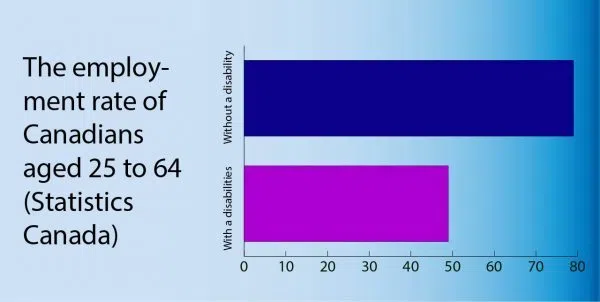
The employment rate of Canadians aged 25 to 64 according to Statistics Canada [Maryna Tverdokhlib]
How visually-impaired people access the internet
People with disabilities use the same gadgets and the same internet as everyone else. But how?
Text-to-speech software text into spoken voice output. It is one of the most common ways in which visually-impaired individuals use to help them utilize the web. Mac OS with built-in VoiceOver that can read out loud all the text on the website which makes it easier for visually impaired people to get the information. Windows users have so called Microsoft Narrator which has pretty much the same functions.
Another common way to access the web and to enjoy all aspects of it are different gadgets and apps like SayText. SayText scans text within an image, such as a medical form or restaurant menu, and reads it aloud.
Virtual bottoms of touchscreen phones made it very complicated for blind people to use them. However, VoiceOver and other apps are designed for the blind in order to facilitate their life.
Christian Vogelauer is visually-impaired. He works with people who have vision disability and teaches them how to use smartphone. According to Vogelauer, visually-impaired people browse the web the same way everyone else does but using helping programs.
Making Internet more accessible
Since 1999, accessibility is regulated on international level. The World Wide Web Consortium (W3C) released the first Web Content Accessibility Guidelines (WCAG). In 2012, the current version, WCAG 2.2 turned into an ISO standard. This document contains 12 guidelines and is based on four principles: operability, perceivability, understand-ability and robustness. The level of accessibility is displayed in three stages.
An accessible website has to be:
- Predictable: navigation and content should be logically placed
- Easily navigated: make sure it is essay to look up different sections of the website
- Adaptable: create content that can be presented in different ways
- Readable: choose simple and easy to read fonts
- Different: include text alternatives like pictures and speech
- Distinguishable: make it easy for users to understand your content
- Compatible: maximize compatibly with assistive technology
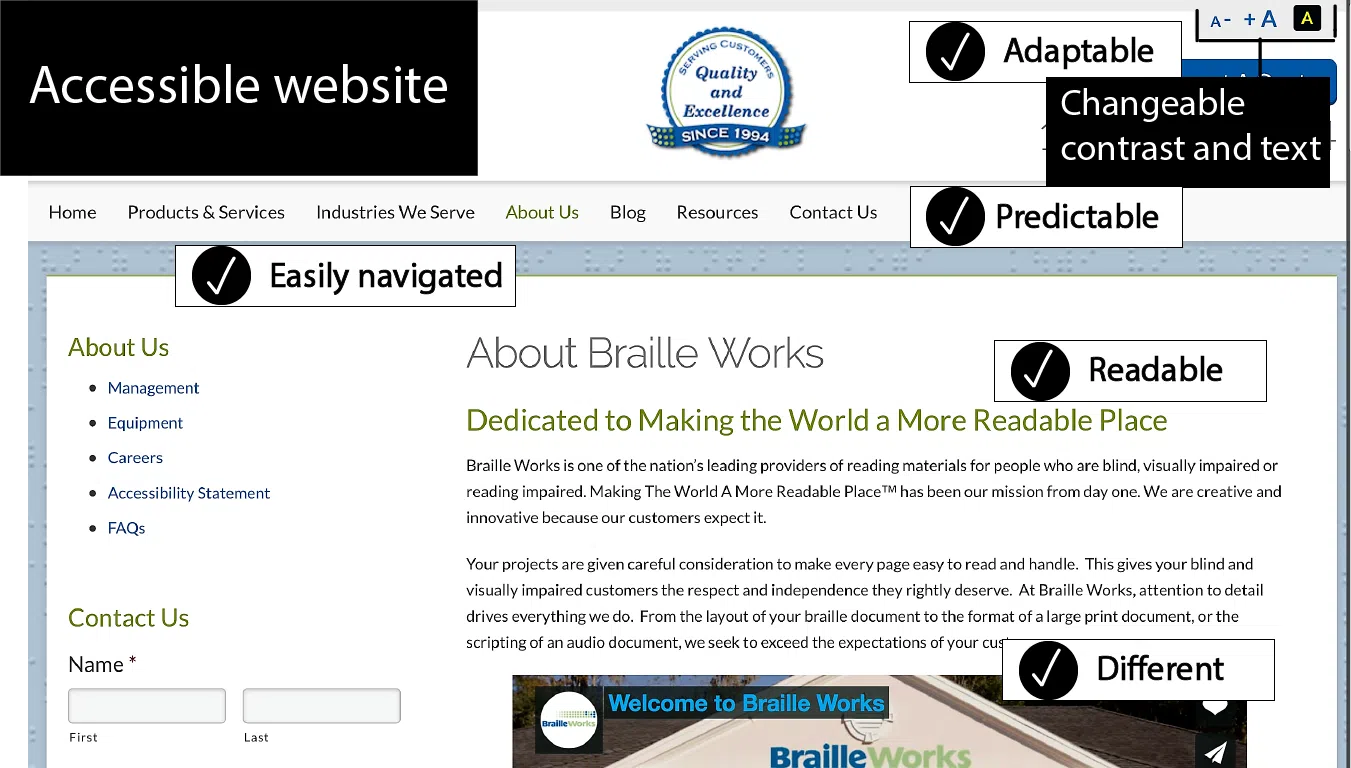
Example of an accessible website [Maryna Tverdokhlib]
People don’t make accessible websites because it costs more money and takes more time. However, it is very important as the internet is a very big aspect of social life. By making websites more accessible, we help visually-impaired individuals by connecting them to the digital world.